


Do you want to shop luxury quality for a fraction of the cost?


This season, three collaborations caught my attention: JW Anderson × Uniqlo, Anna Sui × Old Navy, and Glenn Martens × H&M.
Beyond the hype, they reveal something more profound about where fashion is headed: luxury design is no longer locked behind glass.
Fashion collaborations aren’t just a “nice to have” this season - they’ve become a strategic hinge for both luxury designers and high-street brands. They’re mutually beneficial, offering a lower entry point for consumers while giving designers cultural reach. That accessibility makes them feel special, even valuable. For legacy labels, a collab like Anna Sui × Old Navy or Glenn Martens × H&M offers cultural relevance in markets where exclusivity alone no longer drives spending. People are becoming more aware—and wary—of the economic environment, and brands understand that most of their audience can’t afford to buy designer items at full price.
These partnerships create hype through minute sell-outs, viral drops, and instant social-media buzz — turning fashion collaborations into marketing engines in an era where attention is scarce. It’s an excellent way for designers to reach a younger audience who may not be familiar with their work.
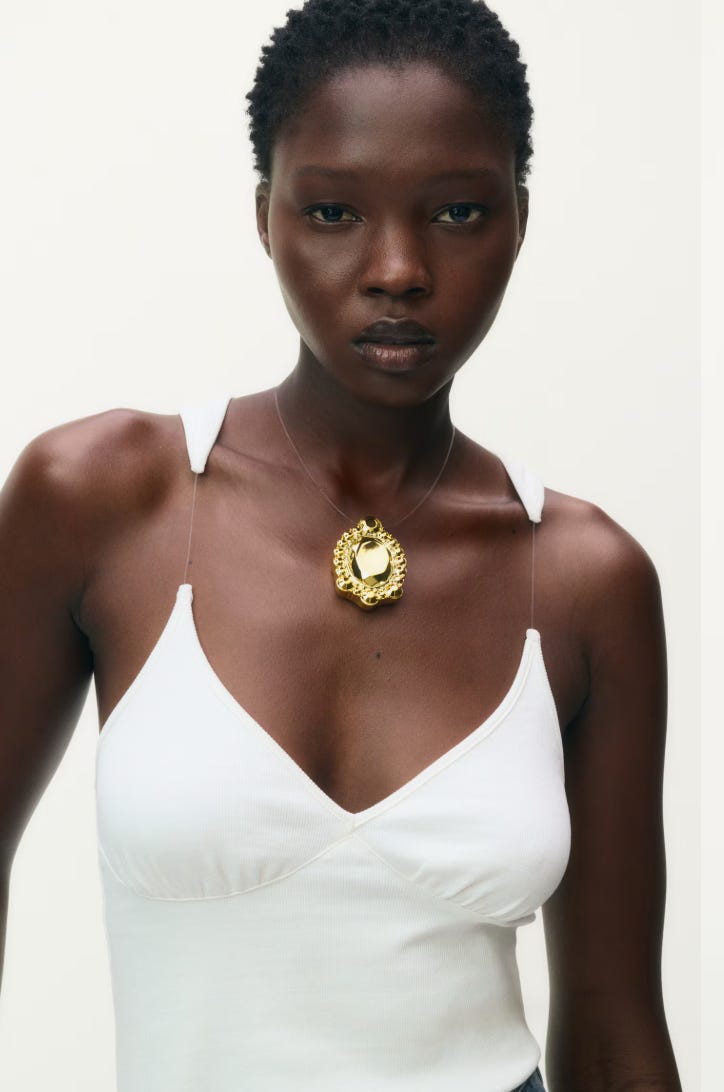
For the consumer, this moment matters because it signals that the old rules of luxury are shifting. It’s no longer beyond our reach; in fact, it’s as attainable as coffee and a croissant for a Glenn Martens tank from H&M.
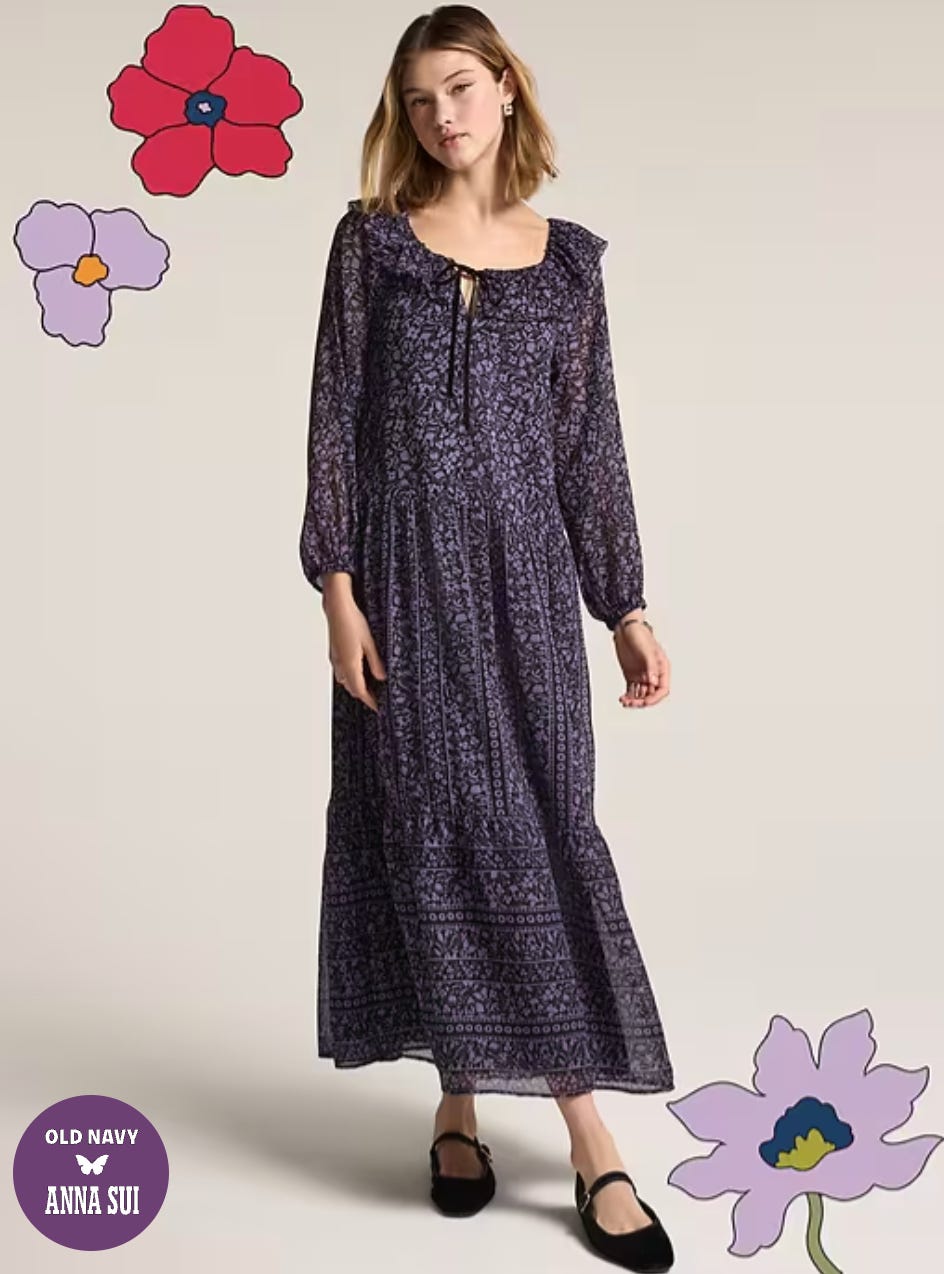
We’ve grown comfortable seeing high-design ideas in accessible places, yet we still crave authenticity, story, and craft. These collaborations tap into a kind of value fatigue—a collective exhaustion with things that mean nothing. When even a $74 dress carries a designer’s name, it feels like meaning in a world of disposability. It’s a slight push toward sustainability in the wasteful realm of fast fashion, suggesting that intention, not price, is what gives clothes their value.
It’s easy to be cynical, to see these collaborations as creativity diluted for profit. But there’s another way to look at it. If more people are learning to recognize proportion, intention, and design through something as simple as a $39 piece, maybe that’s progress in itself. Perhaps what looks like dilution from one angle is actually design literacy from another.
In the end, creativity isn’t measured only by rarity — it’s measured by impact. If a collection stirs emotion, triggers memory, or invites ownership of taste — then maybe what looks like dilution is actually democratization.
My Take
I love what this moment represents. Gen Z (and the ones after them) who shop at Old Navy are getting (what might be) a first encounter with a ’90s icon like Anna Sui. The ’90s were the golden age of individuality, when fashion featured supermodels whose first names alone defined an era: Christy, Naomi, and Linda. Seeing a new generation rediscover that kind of romantic rebellion, even through a capsule rack, feels almost sentimental.


It’s nice that the young “corporate girlie” can reach for her crisp Uniqlo button-down and spot the discreet JW Anderson logo — the designer now leading Dior. And that someone else can walk into H&M tomorrow and try on a Glenn Martens trench (if they’re lucky - it’s already sold out online) for less than a dinner in the West Village.
However, while I celebrate the exposure and accessibility these collaborations offer, I still believe in the thrill of the original. The kind of piece you find second-hand or archived, that carries history, not just hype. It’s not about price or status; it’s about connection - owning something conceived with craft and intention, that outlived the trend cycle it was born into.
The urgency to create “what wasn’t out there,” as Anna Sui once said, rather than to replicate what will meet mass-market taste at a profit point, is what makes fashion meaningful. The collaboration model gives us entry points, but the originals remind us what depth feels like. Both can coexist — the fast and the lasting, the accessible and the aspirational — yet the pieces born of intention will always carry more weight.
Maybe the real evolution of luxury isn’t just its democratization, it’s our growing discernment. We can appreciate an Old Navy × Anna Sui dress for its joyful nostalgia, while still craving the craftsmanship of the original. It’s lovely to see the “fur”-cuffed leather coat made more approachable. Still, there’s something about seeing it multiplied by the dozen under harsh fluorescent lights, beneath a glossy Collab poster, that makes it feel as uninviting as it is attainable.

