


As summer fades, it feels like the season itself is inviting us to reset. There’s something about September - the light changing, the return of school schedules, the collective shift back into routine - that makes it the perfect moment to reignite your rituals and refocus your mind.
After hosting family for a while and soaking up so much of what New York City has to offer, I find myself craving a bit of routine - before the holidays disrupt it all once again.
Another personal reason I wanted to “step on it” is the inevitable flurry of completely revamping your life that hits when January knocks on the door. The wishful thinking and lofty goals of changing big parts of your life and routine all at once are familiar to most of us by the end of December, and I’ve learned that’s not where I want to be. After the short burst of energy and excitement wears off, I’m usually left with overwhelm and an endless to-do list.
And so, as I review my goals with the intention of putting the right systems in place, I’m hoping to make progress on a few, but also to build a safety net of three months’ worth of work and experiments - something I can lean on when New Year’s resolutions roll around.
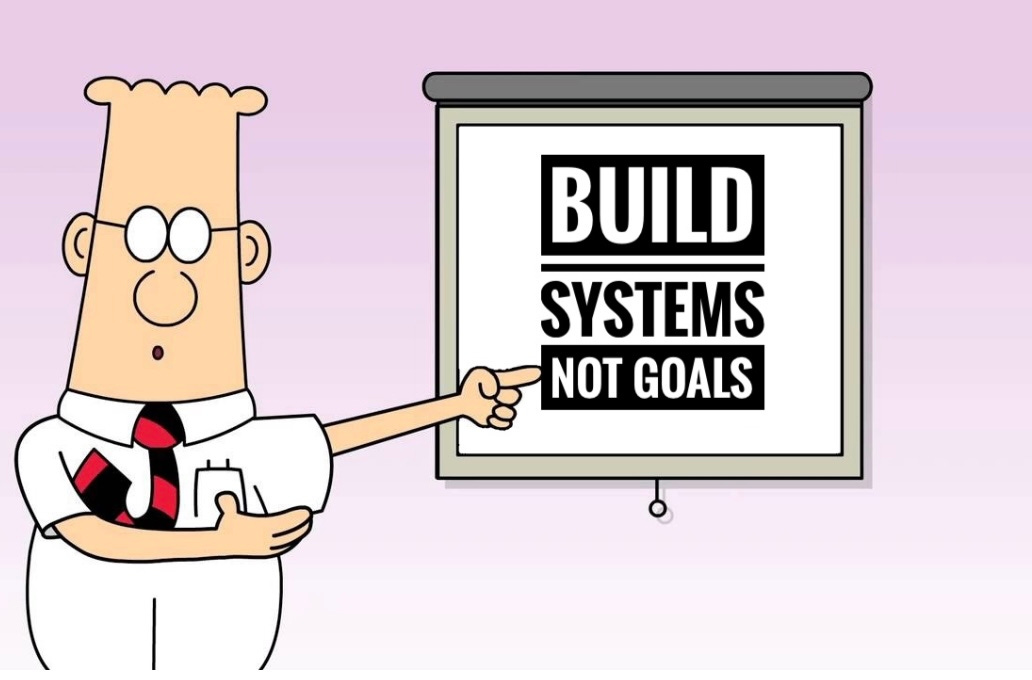
Systems, Not Goals
James Clear said it best: “You don’t rise to the level of your goals, you fall to the level of the systems you’ve put in place.” That line gets me every time, because it’s so easy to get caught up in goals - the big, shiny intentions like I need to exercise six times a week or I want to read every day. But the truth is, motivation is fickle. Systems are what carry you through when motivation runs out.
Building a System
A strong system doesn’t assume everything will go perfectly, that we’ll wake up motivated every morning, put on our workout clothes, and head to the gym as planned.
In fact, it expects things to fall apart. What happens when you’re too tired for the gym? Or when the baby is sick? Or when work runs late? Good systems plan for those bad days and create fallback options. And yes, those fallbacks may feel a little uncomfortable at first (say, hitting the gym after the kids are tucked in, when you usually relax in front of the TV) - but that discomfort usually signals you’ve found a new way forward, a path that might deliver the results you’ve been chasing.
The structure of a system is simple but powerful: first, there’s a trigger - the signal that sets the habit into motion. Running with the same example, you put your workout clothes in the bathroom the night before, so when you brush your teeth in the morning, you see them and remember: “ha, I wanted to go to the gym.” And so you put them on, removing the decision of what to wear since you already set it out yesterday.
Then comes the process: the specific steps you follow, as clear and repeatable as possible. Maybe you’ve decided on your pre-workout, with a banana and water ready. Your family knows this is your workout time, so they don’t count on you for drop-offs. You’ve packed your bag since you’re heading straight to the office afterwards, and even prepped your post-workout snack because you’re focused on building more muscle. Great. You also have a fallback plan for when things go south - maybe rearranging your evening routine to squeeze in a shorter session, with a 20-minute workout ready, instead of a 40-minute one, knowing evenings aren’t ideal for you. You get the gist: plan to the T, build in contingencies, and be ready for discomfort. And most of all, remove all decision-making.
Finally, there’s the audit: checking in on what’s working, what’s not, and how to refine. There’s no sense in sticking to a plan that isn’t serving you. Be honest, review often, and find creative ways to adjust your systems. Remember: baby steps are better than none. If you aimed for six weekly workouts and landed on three, that will still get you to a stronger body far quicker than doing nothing at all.
That cycle - trigger, process, audit - turns vague wishes into real, lived routines. It takes you from “I want to be much more fit by the end of the year” to actually seeing results, building your confidence, and self-reliance.
The Role of Boredom
Here’s the catch: repetition isn’t glamorous. In fact, it’s boring. At some point, the excitement of starting something new fades, the results aren’t visible yet, and you’re just left with the work itself. Maybe the gym was fun at first, you saw some quick progress, but now you’ve plateaued. You’re tempted to hit snooze, the compliments have slowed, and your body still doesn’t match the ideal image in your head.
That’s the moment when most people quit. But boredom isn’t the enemy - it’s the bridge. Sticking with it through the boring middle is what builds consistency, and consistency is what builds trust in yourself.
Compounding Gains
What’s exciting is how much this compounds over time. The example James Clear presents is: If you get just one percent better every day, after ninety days, you’re already about two and a half times better than when you started. Stick with it for a year and you’re nearly thirty-eight times better. Small wins don’t just add up - they multiply.
Another way of looking at your goals: The Rule of 100
And then there’s the Rule of 100, which I love: if you spend one hundred hours a year (just eighteen minutes a day) on a skill, you’ll be better than ninety-five percent of people in the world at it. Think about how far that kind of consistency can take you. You don’t need to overhaul your life, just carve out a small pocket of time, and make a steady effort. Imagine what that could look like applied to writing, cooking, fitness, or even parenting - whatever matters most to you.

Beware of the traps
If you’re sold on the idea of systems instead of goals, or at least want to give it a try, bear in mind - we’re not talking about 5 new goals, the most common advice is to focus on 2 (3 at the max) things.
When things inevitably fall apart, and you want to give up, remember that you can take a break instead! Rest, re-energize, and pick up where you left off.
Eyes on the prize - do not compare your slow but steady path to someone else’s highlight reel on day 100. Focus on what matters - your progress, your 1% improvement day over day.

One of the most powerful lessons I’ve learned is this: it’s not really about the goal itself, but about the person you need to become to reach it. So as the season shifts, think less about setting lofty goals and more about designing systems that work - even on your worst days. Expect obstacles, welcome boredom, keep showing up, and audit often. The more you do, the more you’ll find yourself following through. And with each cycle, you build a little more trust in yourself to keep going towards your desired life (and goals).
Implement now, or save for the end of December, and thank me later:)