


Fashion is often described as escapism, but it rarely ignores the world’s atmosphere.
Designers absorb the emotional climate of their time — consciously and instinctively — and the clothes that appear on the runway often reveal different ways of negotiating the world we live in.
While many people said this season of Paris Fashion Week felt detached from current events, I found more than one example to the contrary. The collections didn’t converge around a single aesthetic or silhouette. Instead, they offered different responses to the global climate.
Louis Vuitton — Collectively Cute


The designer drew inspiration from nature filtered through fantasy: mountains became sculptural shoulders, forests became fuzzy textures, and people became something closer to mythical creatures.
The runway itself became a whimsical landscape. That sense of charm carried through the details. Lambs and other pastoral creatures, drawn from the work of Ukrainian artist Nazar Strelyaev-Nazarko, introduced a deliberately naïve note, while mineral-like buttons and antler-shaped heels pushed the collection further into the realm of storybook imagination.
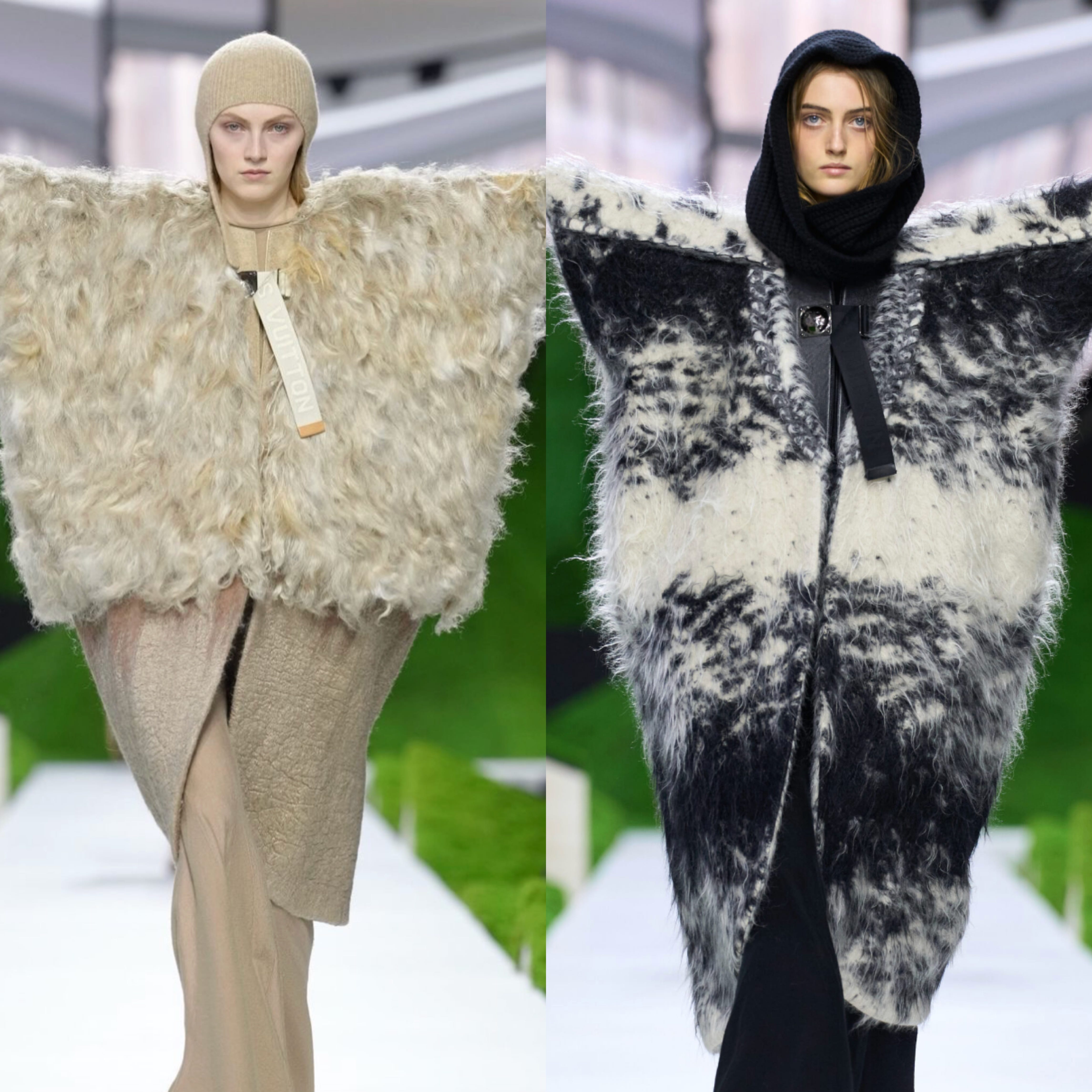
Louis Vuitton may operate at the commercial center of luxury, but the runway still gives Ghesquière room to be eccentric and surreal. The result was an avant-garde collection that, to me, felt like it offered a bit of armor against the world, while hiding the whimsy and softness inside.
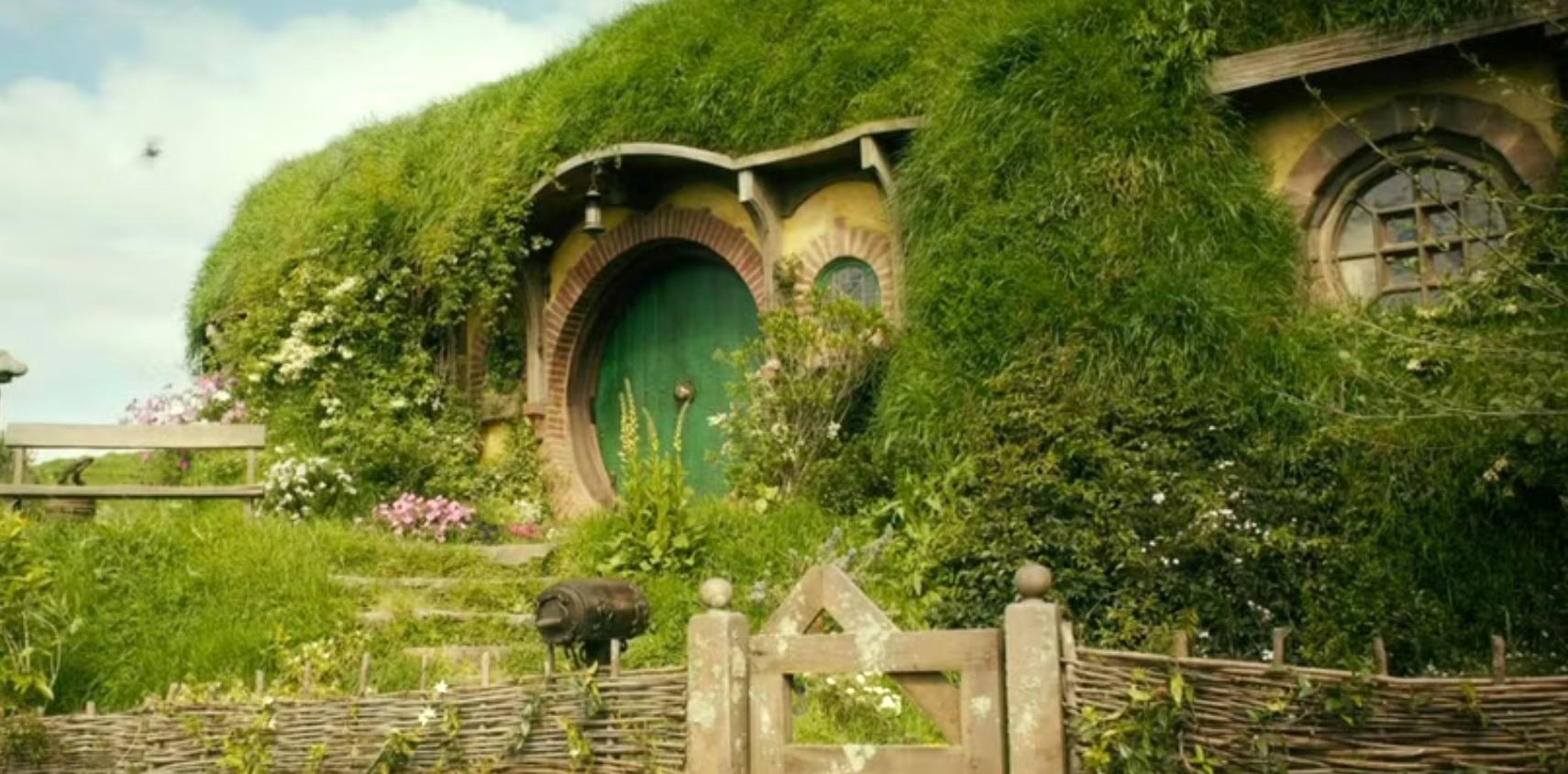
Fun fact: Nicolas Ghesquière asked Jeremy Hindle, the set designer behind Severance, to create the show’s landscape. The Cour Carrée of the Louvre was transformed into rolling green terrain echoing the Jura Mountains where Ghesquière grew up.


Chanel’s Construction Site
Whether the global mood makes you want to dance into escapism or retreat into something darker, there seemed to be an option for everyone on Chanel’s construction site.
For his sophomore collection, Matthieu Blazy continued what feels like an ongoing conversation with Gabrielle Chanel herself. As in his earlier work at the house, he handles the codes with reverence while treating them as something still in progress—quite literally, with cranes looming over the runway—slowly building his own interpretation of what Chanel means today.
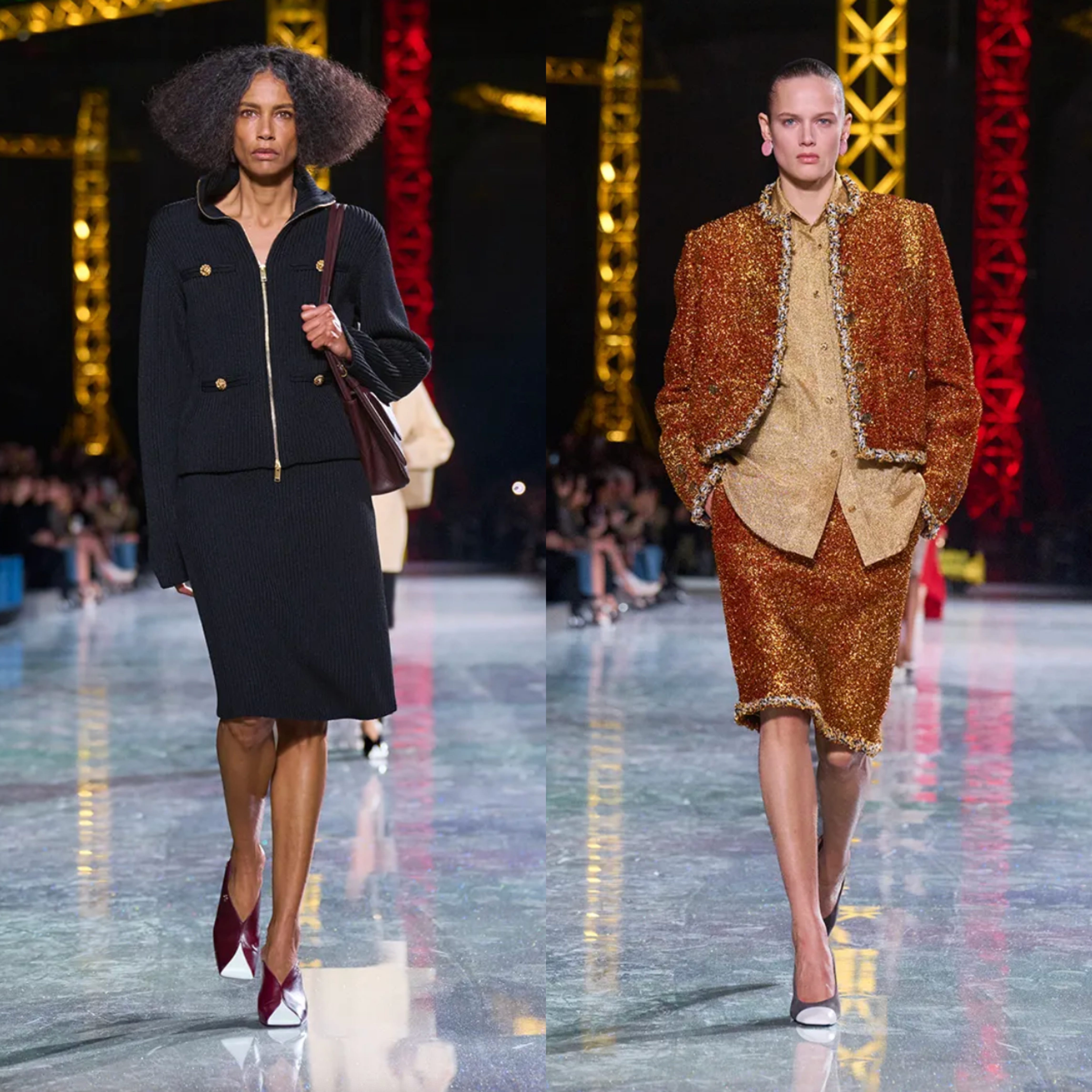
For Blazy, Chanel is a house built on paradox. Drawing on Gabrielle Chanel’s idea that fashion must both “crawl and fly”—practical and eccentric at once—he described the house as a constant negotiation between opposites: function and fantasy, restraint and seduction, day and night.
The soundtrack mirrored that tension. The show moved between more sombre tones and bursts of energy before ending with Lady Gaga’s Just Dance, which filled the Grand Palais and tilted the mood firmly toward joy.
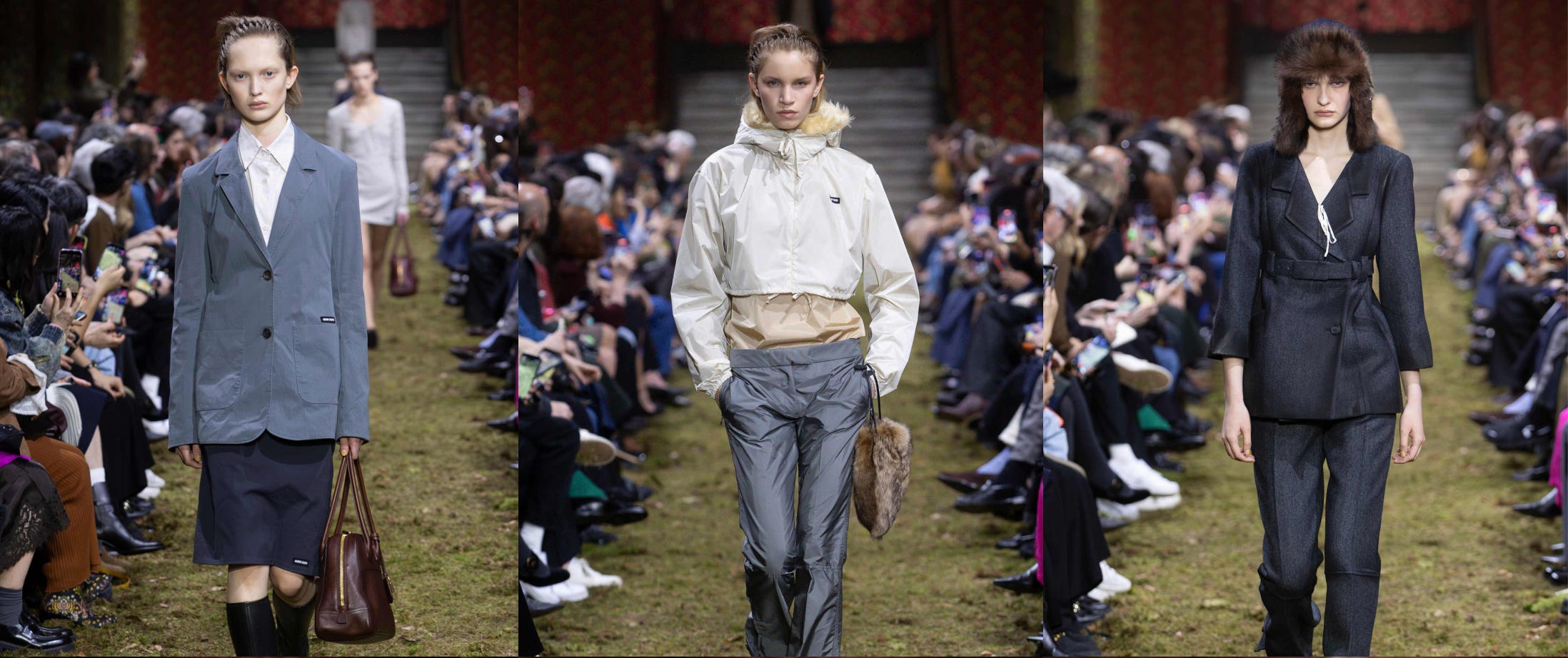
Miu Miu - M for Melancholy?
The human remained in focus: person before presentation.
“Sometimes it’s completely stripped back, and sometimes it’s embroidered, but it’s just to say that as a human person you are enough,” Miuccia Prada said. “You have yourself, you have your mind, and that should be enough against whatever happens.” They were poignant words at the close of a Fall/Winter 2026 season.
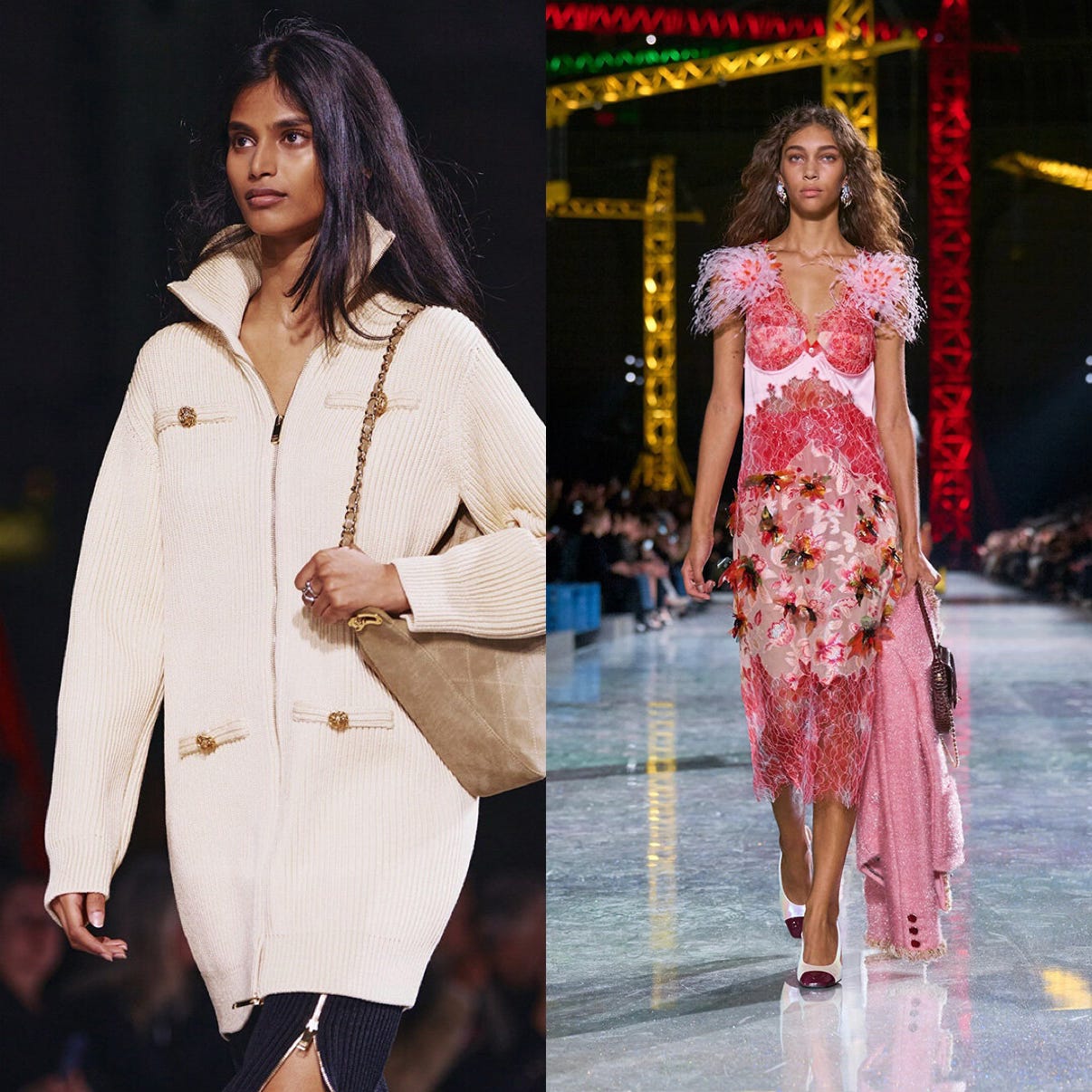
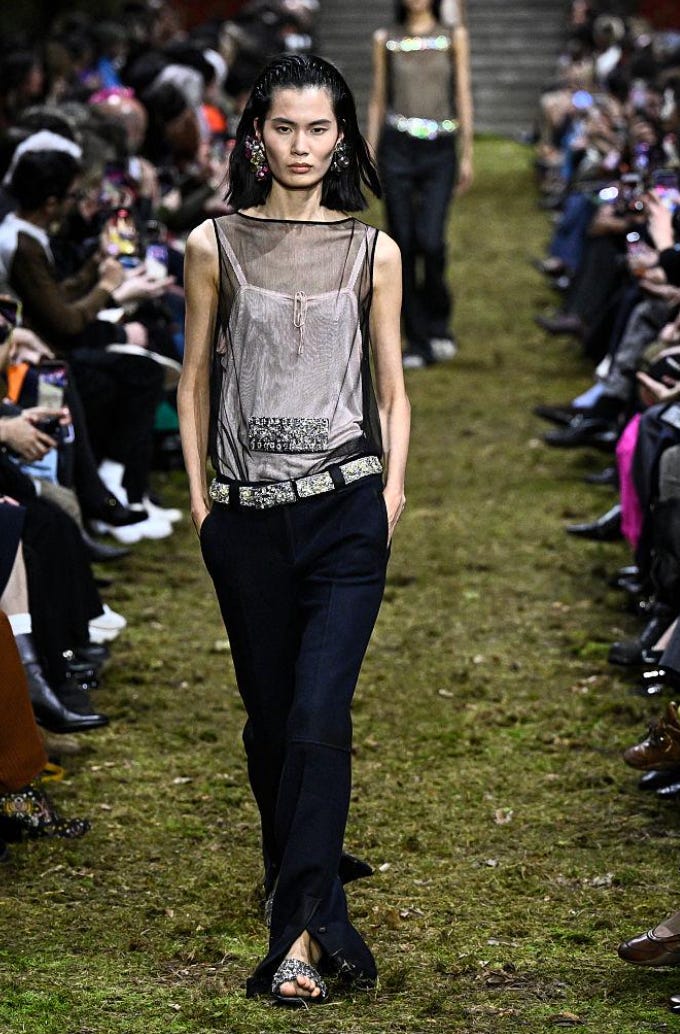
If you know Miuccia, you expect something intellectual and cerebral. This time was no different, though the mood felt even more stripped back — and perhaps a little melancholic. The Miu Miu “girlie” has matured into a woman: simple silhouettes, a touch of embroidery, and a mood that feels more introspective than in past seasons.
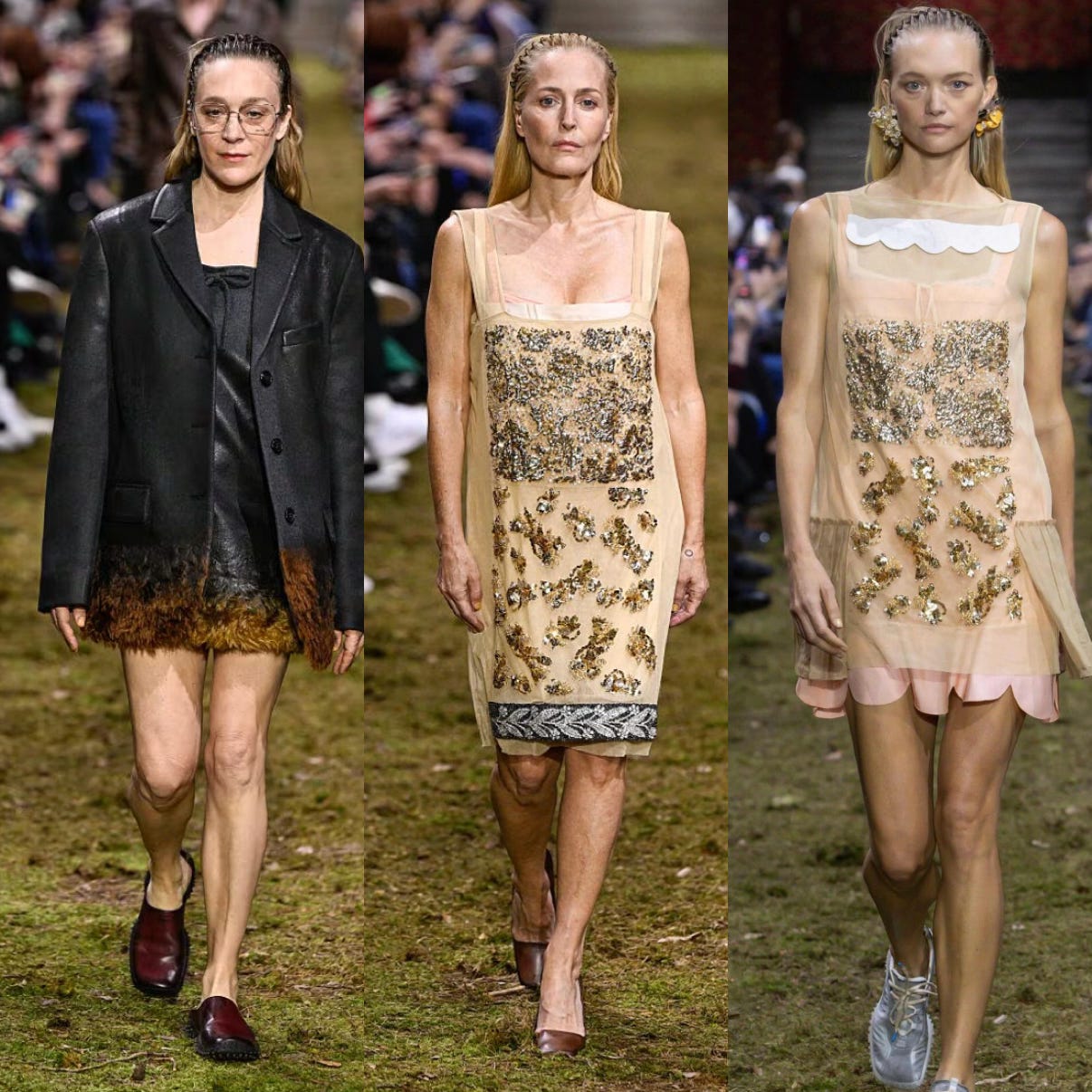
On a grassy, down-to-earth runway, Prada reinforced that idea with a personality-driven cast that included Chloë Sevigny, Gillian Anderson, and Gemma Ward.
Dior’s Joy and Princess Dream
Set in the Tuileries Garden, Anderson drew inspiration from the tradition of the public garden promenade — that distinctly Parisian ritual where fashion and the act of being seen go hand in hand. For centuries, these gardens have served as informal runways: places where people stroll, observe one another, and quietly display their identities through clothing. We still participate in the ritual today — though in my case it’s less Tuileries promenade and more a playground stroll.
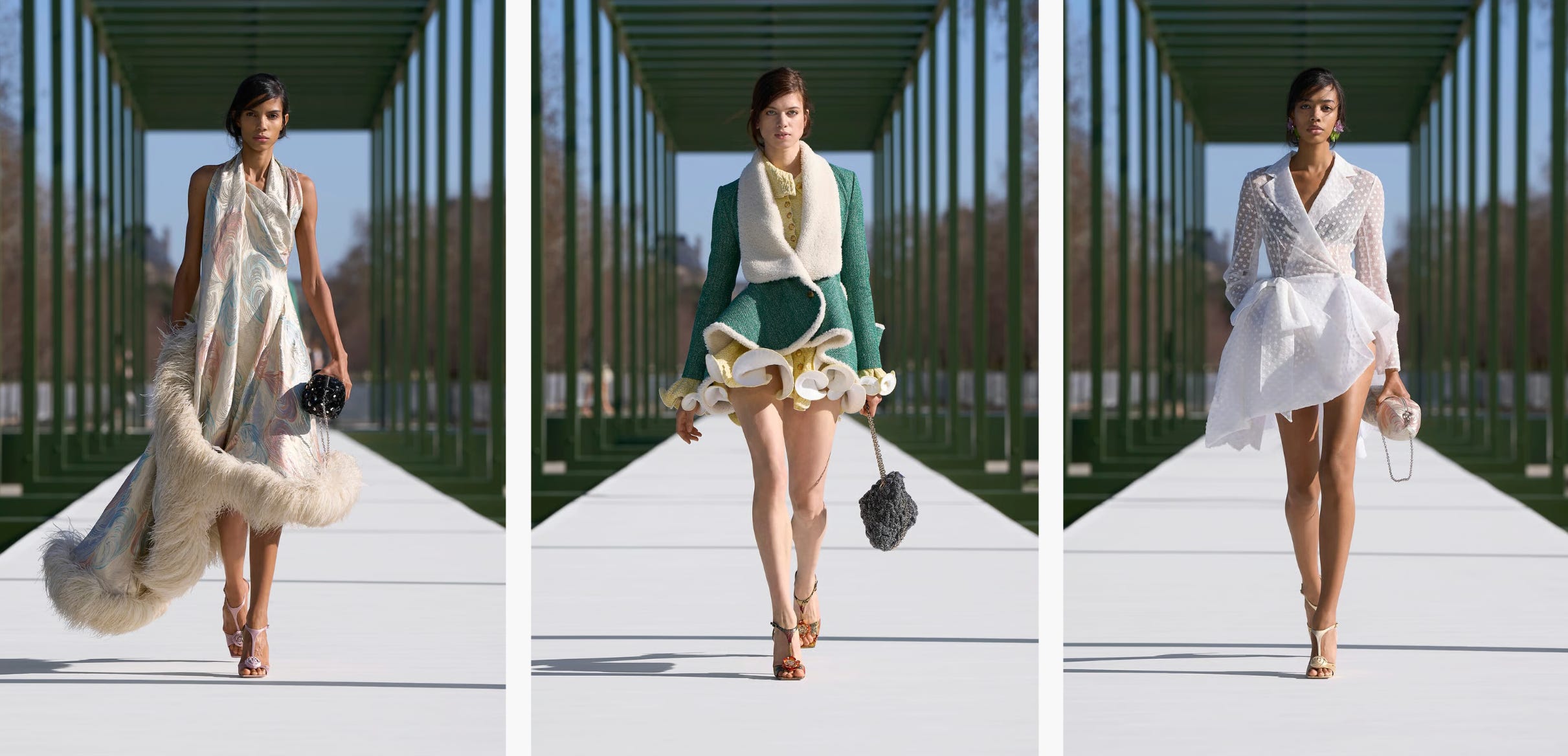
The clothes followed that same idea of romantic visibility. Familiar Dior codes — the Bar jacket, structured waists, and frock-like silhouettes — appeared softened, almost blooming, echoing the surrounding garden. There was something intentionally dreamy about it all, like stepping into a living illustration of Dior’s long-standing love affair with flowers and femininity.
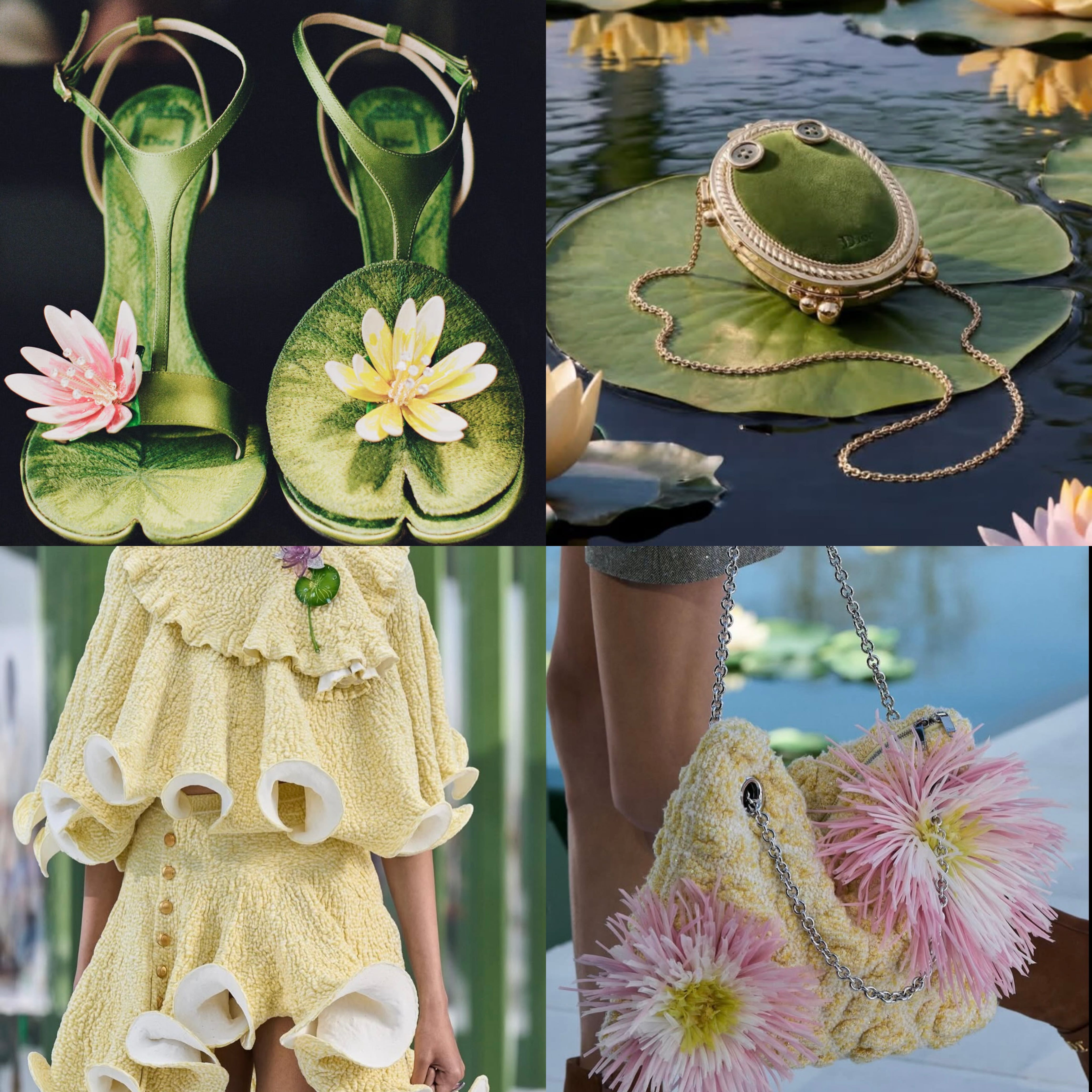
If Anderson’s romantic mood signals a broader societal return to the princess dream, it’s not entirely surprising. In uncertain moments, fashion has often leaned toward fantasy — not as a denial of reality, but as a way of briefly stepping outside it.
Prada — Creative Sustainability, Without Saying It
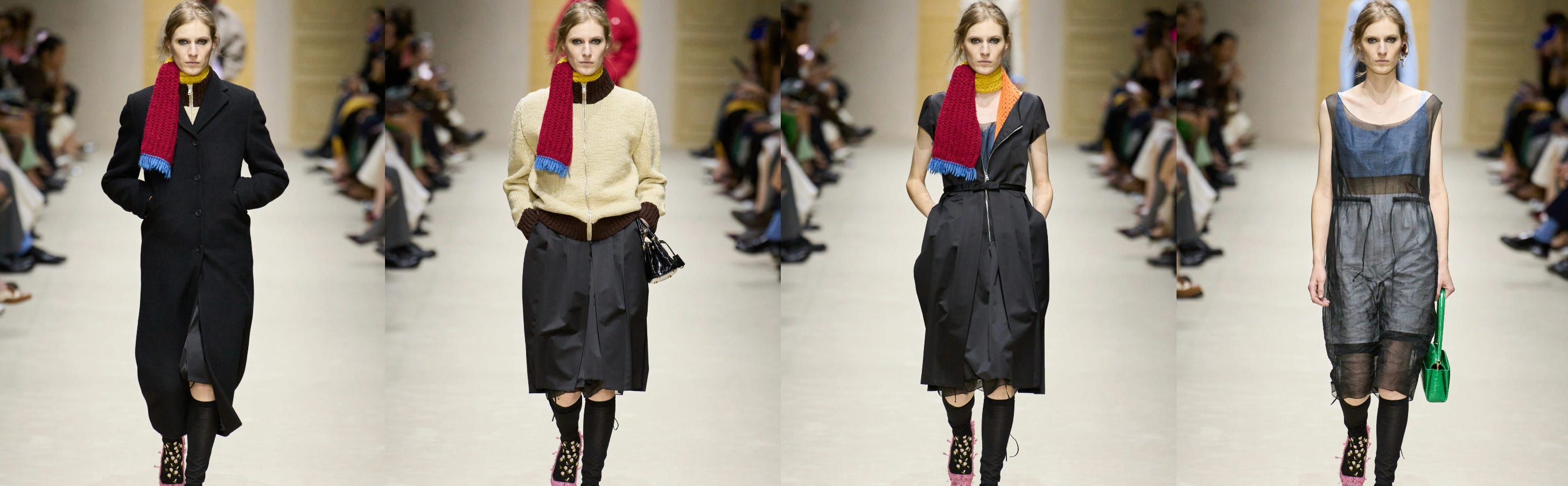
Fifteen models, four exits each. For FW2026, Miuccia Prada and Raf Simons turned layering into a reflection on time, identity, and the quiet politics stitched into our clothes.
“We started from the idea of layering — complexity — which exists in history, in politics, in life,” Miuccia Prada said. Clothes, in that sense, become a way of mapping those layers: different personalities, moments, and sentiments worn together in the course of a single day.
The slightly timeworn aesthetic appeared here as in previous seasons, attuned to the shifting economic climate. Prada offers a lifestyle and a point of view as much as individual garments. Some will buy the deliberately worn-looking coat from the boutique on Broadway and Prince; others may chase the same spirit at a thrift store or in an online resale market. And that, in many ways, is the point: a vision that is desirable, yet ultimately replicable at a lower cost.
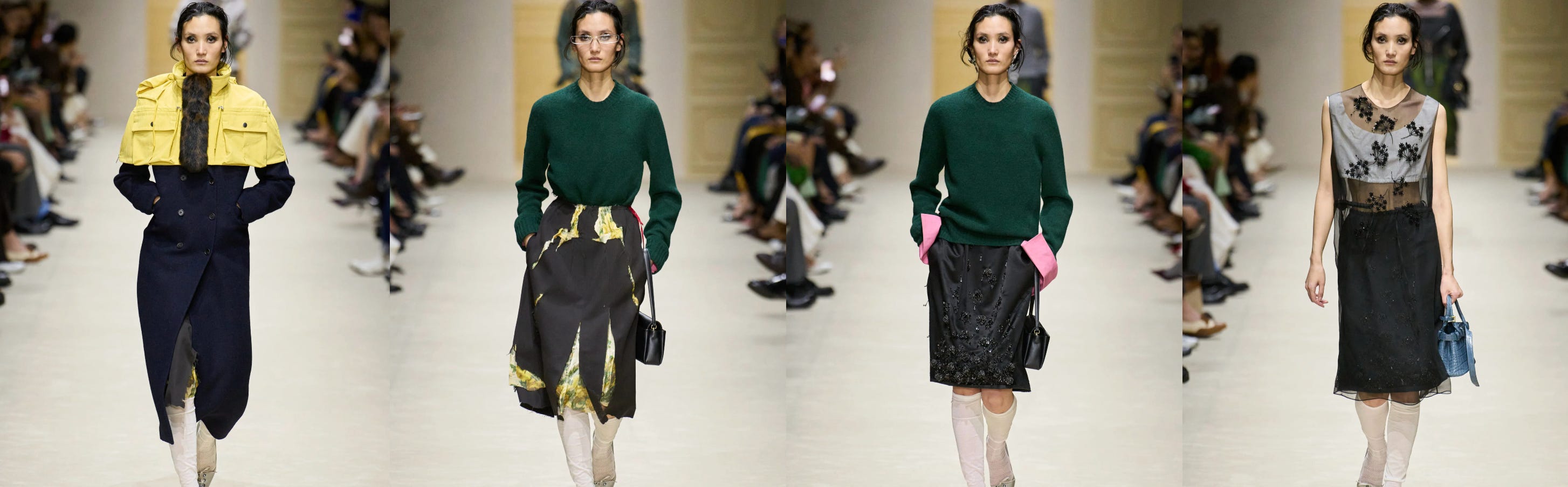
On the runway, those layers slowly revealed fragments of the past — classical statue prints, faded florals, worn embroideries — suggesting that identity is never replaced, only adjusted.
As Prada herself put it, understanding where we come from may be the only way to move clearly through the present.
How to move through an uncertain world?
Over the last month of shows, brands and designers have grappled with the same underlying tension — between the realities of the world outside, and the role fashion should play within it. In a time of escalating global uncertainty, do we respond with defiant creativity or with austere restraint?
Whether through Miuccia Prada’s layered histories, Miu Miu’s stripped-back humanity, Blazy’s paradox at Chanel, or Ghesquière’s whimsical landscapes at Louis Vuitton, each collection proposed its own strategy for moving through the present moment. Perhaps that is fashion’s real role in uneasy times: not to solve the tension of the world, but to show us different ways of living inside it.