


Back at the beginning of the year, there was a lot to follow in Paris, so many exciting debuts and interesting moments to watch. The internet was tripping over itself to declare who drew the most attention: JW Anderson for Dior or Matthieu Blazy for Chanel. It felt like following a long championship run, and people were enjoying everything high fashion has to offer, especially in Paris: the haute couture, the spectacle, the exquisite craftsmanship, the beauty of it all.
But then the focus drifted elsewhere, and the tone began to shift. Why were the lords of Amazon sitting in the front row? Was this connected to Mrs. Bezos appearing on the Vogue cover?
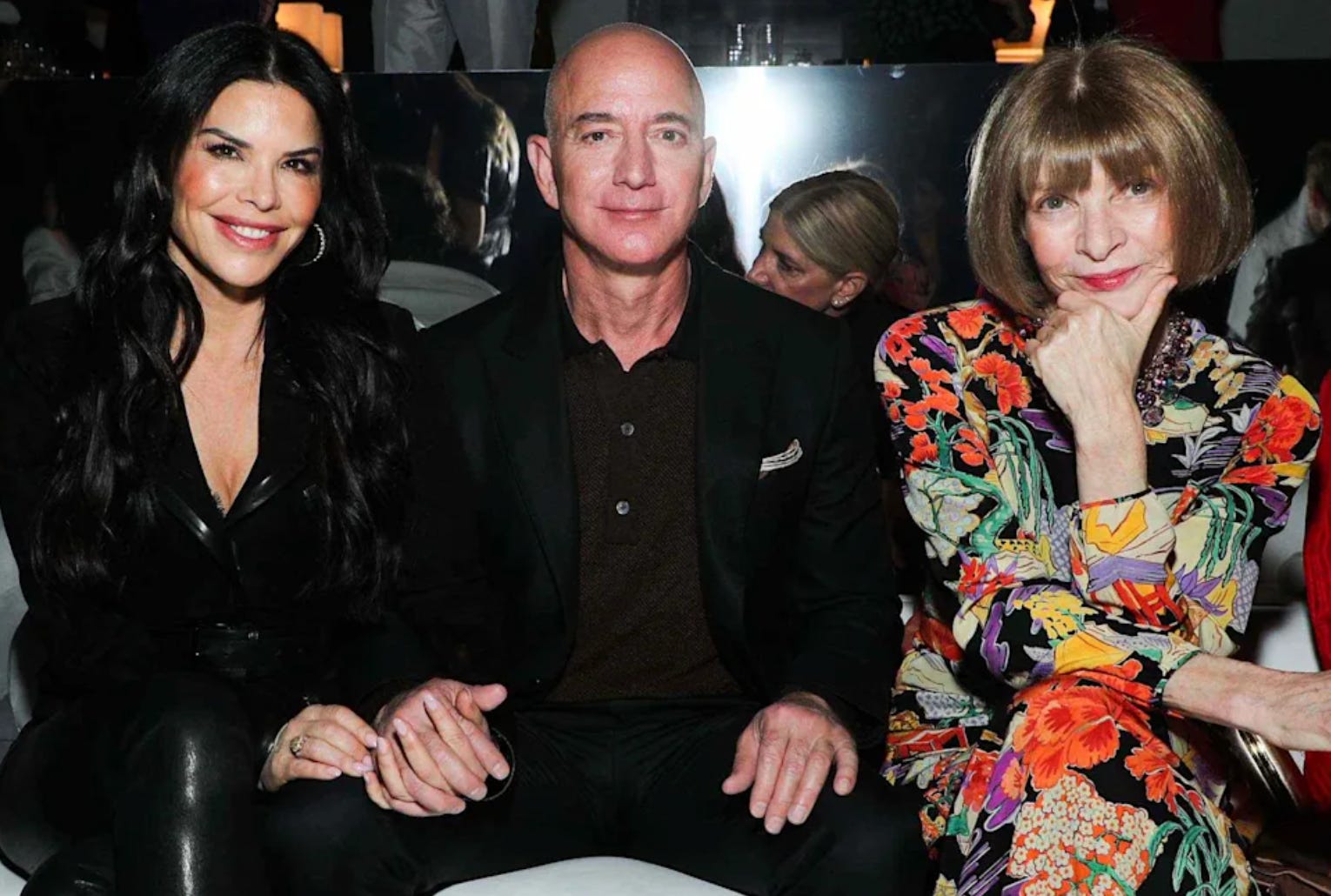
Nobody liked seeing Jeff Bezos and Lauren Sánche in the front row, and it didn’t land quietly. Loud whispers suggested Bezos might be considering media acquisitions, adding Vogue, or perhaps even the whole Condé Nast group, to his portfolio, which might explain rubbing shoulders with Anna Wintour. It made everyone shift uncomfortably in their seats (and by that I mean holding nothing back as they shared commentary about the couple, their aspirations, and Sanchez’s appearance and style).
Which was also when many people remembered — right, aren’t they hosting the most influential event in fashion this year?
A Different Kind of Host
The Met Gala is, at its core, a fundraising event held on the first Monday in May to support the Costume Institute at the Met - though most people know it as fashion’s biggest party, where everybody walks the famous stairs in over-the-top outfits. This year’s exhibition theme is costume art, and the dress code that is declared each year anew is “fashion is art” - “examining the centrality of the dressed body”.
For years, the event’s financial backbone has largely come from corporate sponsors rather than individual patrons. This year, there’s a noticeable shift, with a “reported seven-figure contribution” from Jeff Bezos and Lauren Sánchez Bezos, making them lead sponsors for the 2026 exhibition and Gala. Brand support remains: Saint Laurent, and, as always, Condé Nast.
This development is not completely abrupt. Bezos has contributed to the Costume Institute on various occasions since 2012, but the scale and visibility of the couple’s involvement have escalated quickly, cue Sánchez entering Bezos’ universe, and consequently penetrating ours.

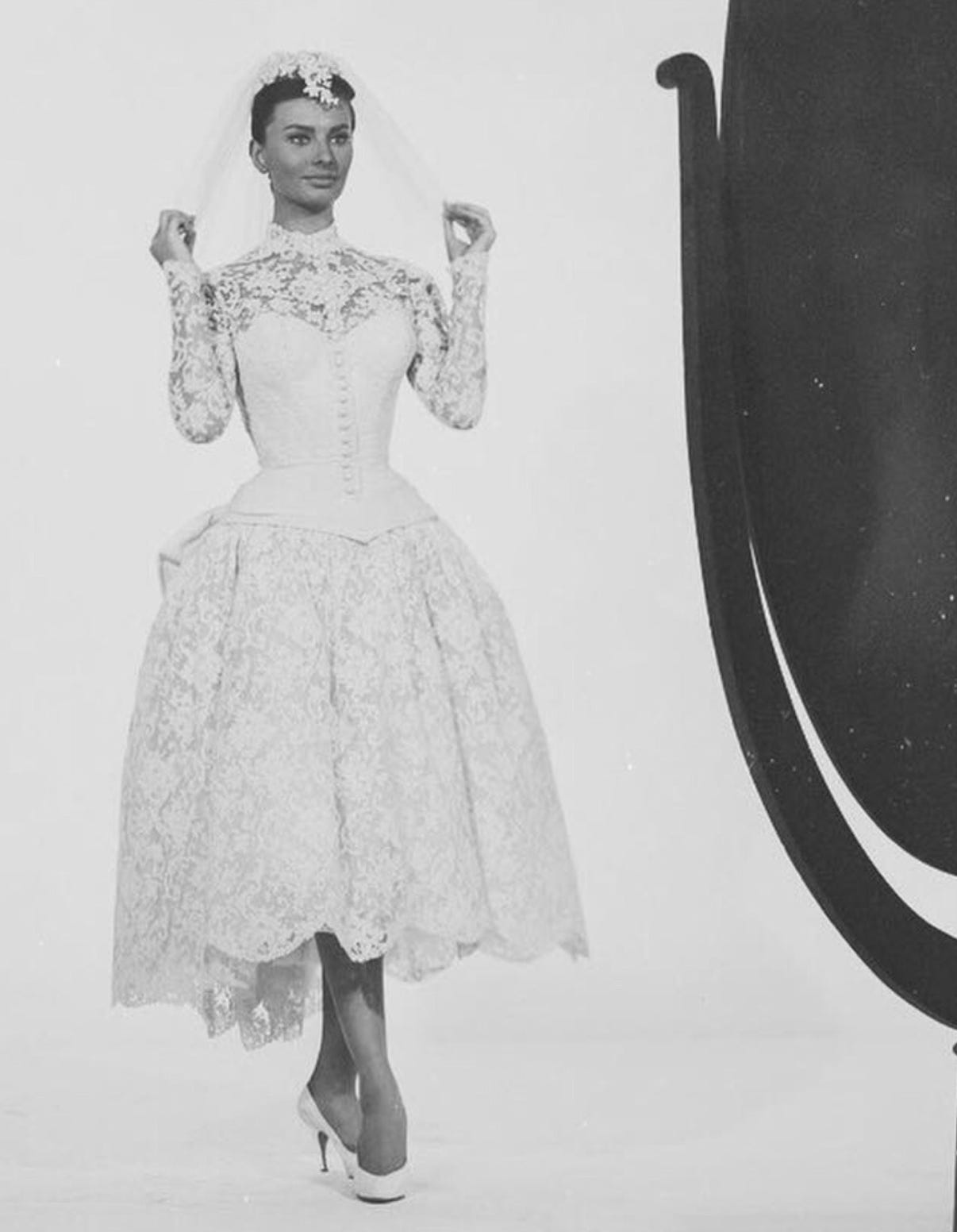
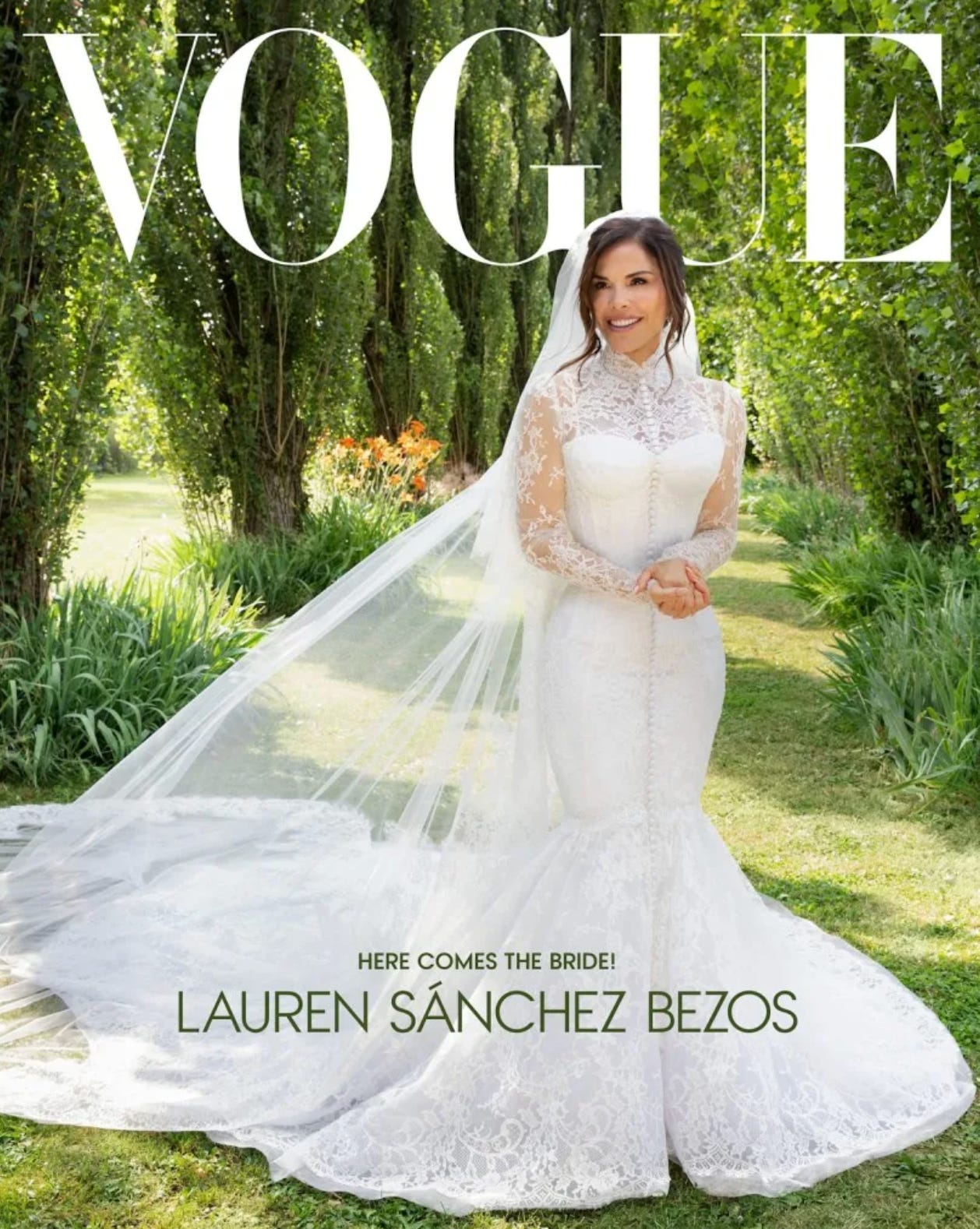
The couple’s initial rollout into the fashion world (which will soon escalate into what feels like a hostile takeover) was in 2024 at the Met Gala. They skipped 2025 to ruin people’s Italian summers, aggravating local residents into protest, and shortly after that, Sánchez appeared on a solo digital Vogue cover, sealed in bridal Dolce & Gabbana. The dress took 900 hours of atelier work and was inspired by the wedding dress Sophia Loren wore to marry Cary Grant in the 1958 film Houseboat.
Patronage has always existed in fashion and museums, but in a time when it seems that everybody is selling out, the oligarch funding of the Met Gala - once the epitome of exclusivity and taste - lands differently.
This used to be an event for the fashion elite, where Anna Wintour famously decided who would appear and make a huge leap in their career, and who would be left out, awaiting better luck next year.
Luxury: From Luster to Polyester
Starting May 10, the show will inaugurate the Museum’s new Galleries. This opening and the physical move from the dungeon-like lower levels to the sunny, elevated first floor felt symbolic in its own way.
While the collections may finally enjoy basking in the sun, you can’t really say the same about the fashion industry overall, and the luxury sector in particular.
In case you blinked, it’s possible you missed the downpour of high–low collabs springing up daily, like mushrooms after rain — Galliano for Zara, Chavarria for Zara, Victoria Beckham for Gap, Stella McCartney for H&M — just to mention a few recent ones. These “capsule collections,” when executed well, used to feel like a special offering from the fast-fashion giants. Now they just feel like yet another merch drop, turning everything into repetitive and forgettable.
And here’s the part that bothers me: it’s not the collaborations themselves, it’s the framing around them — selling end customers the same low-quality garments but now calling it “accessible luxury,” while jacking up prices. It’s the greenwashing, the language laundering, and the overall dilution of craftsmanship and artistry, with high-end brand names attached at a mass-market scale.
Repeat After Me: You Can’t Buy Taste
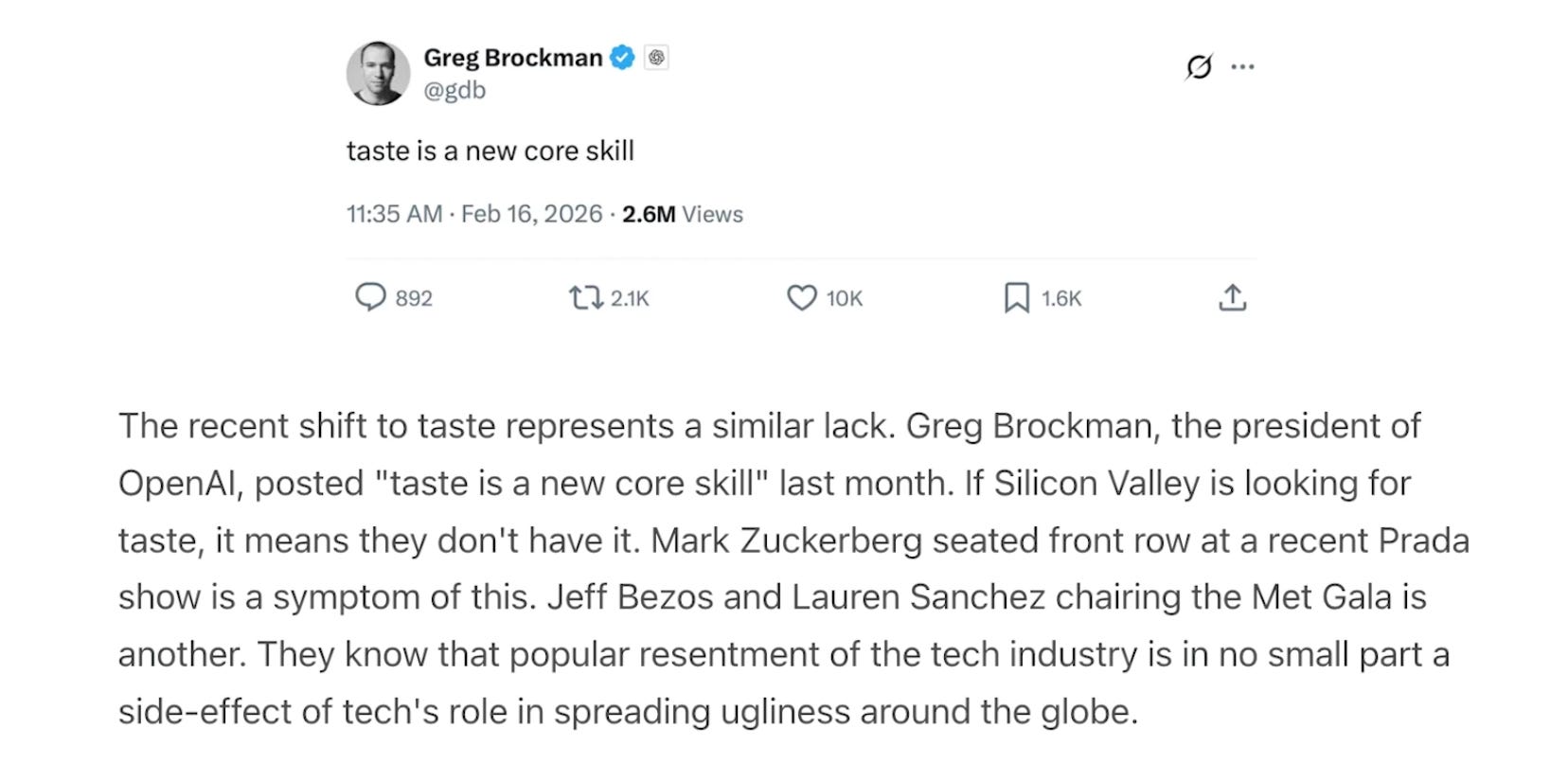
You can’t opt out of them, tech moguls, now can you? Even fashion is no longer a safe space. Listen, I’m not naive, money makes the world go round, but can’t you at least buy me dinner first? Can’t you make the minimal effort of finding Lauren Sánchez the right stylist to make her look like she might actually belong in the realm of a fashion persona that she so desperately wants and tries to become? Instead of making it look like you're getting her the pony she pointed at, saying, “I want this.”
It feels like the speedy delivery of an unwanted Amazon package, only there’s no return address. Fashion has always been about access, and historically it came with a certain… choreography.
The Met Gala isn’t just another soirée - it’s uniquely symbolic because it sits at the intersection of museum culture, celebrity culture, philanthropy, and fashion legitimacy. Attending, co-chairing, and certainly leading the event with such forceful visibility signals something broader about who holds influence and who rules the ball.
Some demure in both appearance and tactics could’ve served them much better in the public eye. Of course, none of this seems to concern the couple, and apparently, what makes Mrs. Sánchez happy is her husband buying her the party of the year.