


There are fashion shows that demand a reaction (who said Dior menswear?) and those that demand attention. Valentino’s Haute Couture presentation this season fell decisively into the latter category — a show that resisted speed, refused easy capture, and made the act of looking feel deliberate again.
SPECULA MUNDI (Latin for “mirrors of the world”) was Alessandro Michele’s first couture show for the house following the passing of Valentino Garavani just a few days prior. The emotional weight of the moment reshaped how the collection was presented and received — not as a debut, but as an act of stewardship carried out in real time.


A runway replaced by a viewing device
The show began with Valentino’s voice in the background, sharing his love of the cinema, where the inspiration and desire to “dress beautiful women” was born.
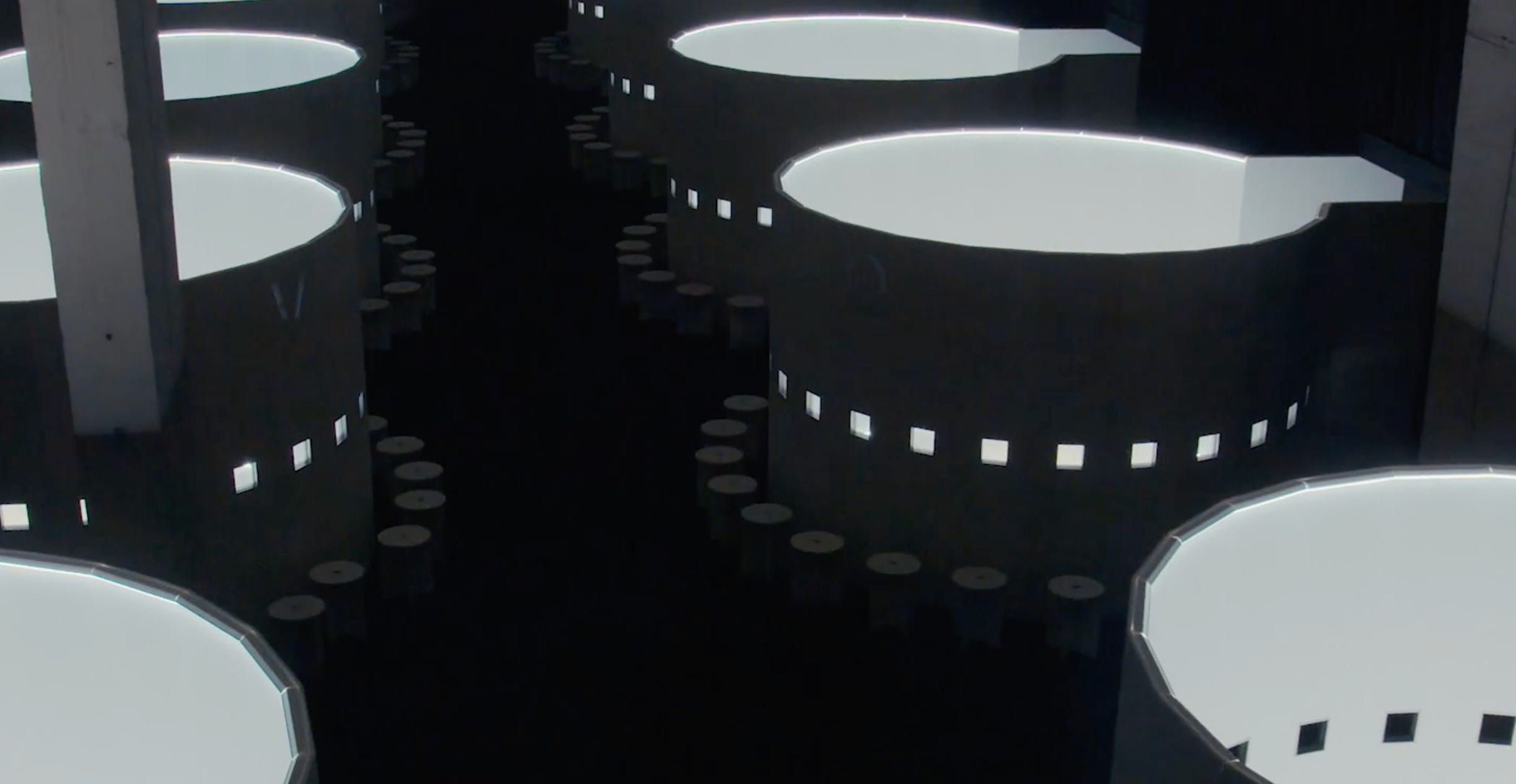
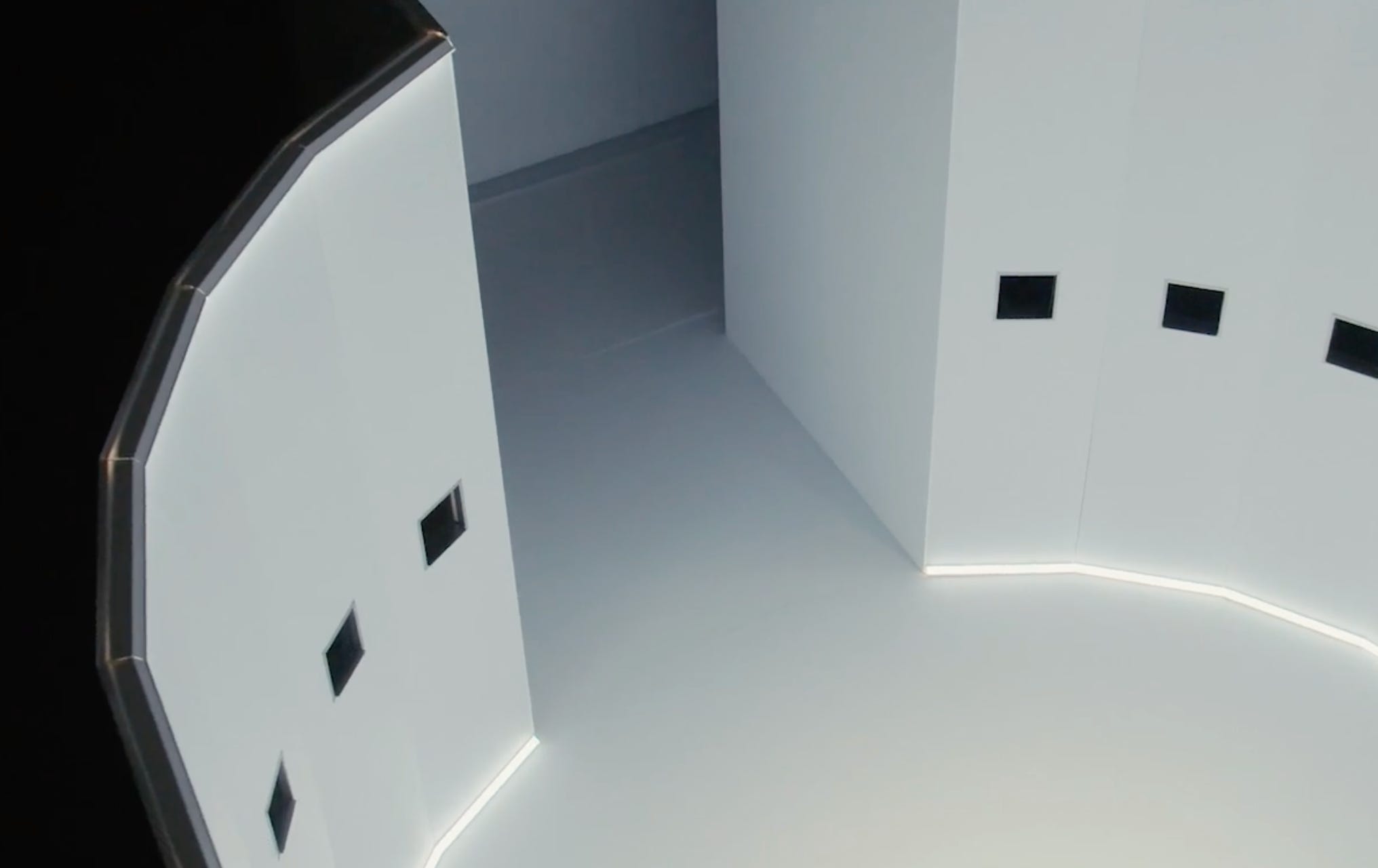
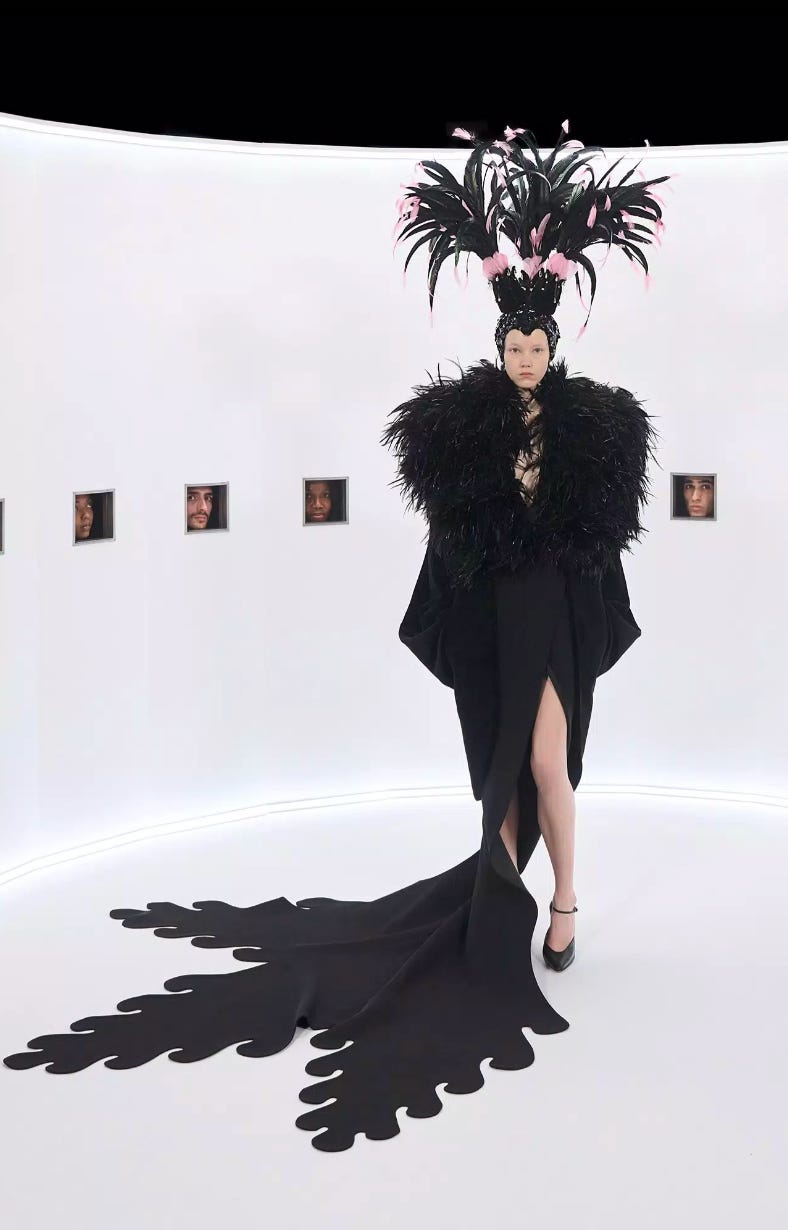
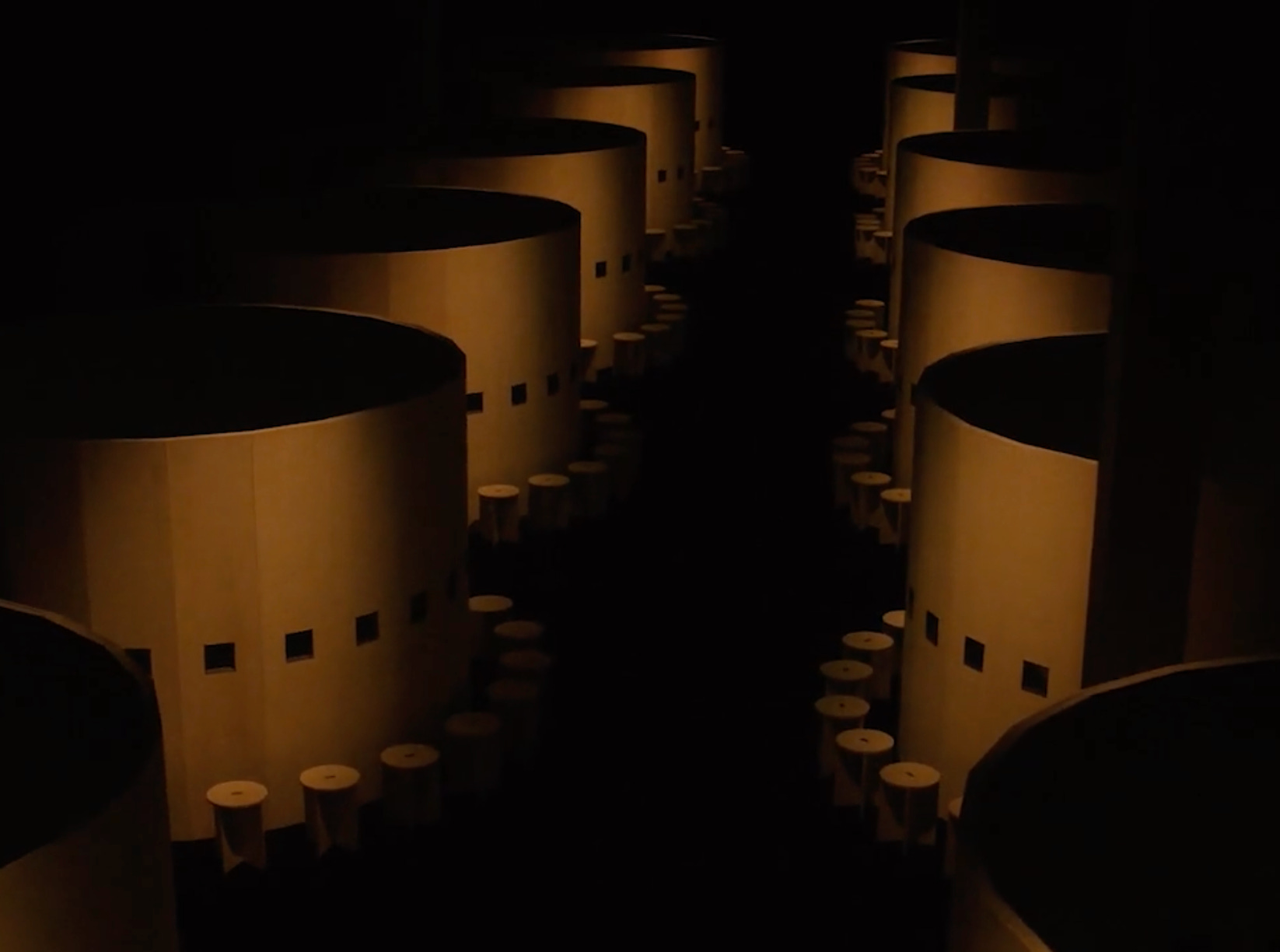
Rather than a traditional catwalk, guests were seated around a circular structure modeled after a Kaiserpanorama — a 19th-century viewing apparatus that allowed multiple spectators to observe images individually through small portholes.
Each person watched alone. And yet, everyone watched at the same time.
The Kaiserpanorama was a commercial, ticketed form of mass entertainment, not a niche intellectual experiment. Invented in 1880 by German entrepreneur Auguste Fuhrmann, it appeared in dedicated venues across Europe and was explicitly designed for broad, paying audiences, long before cinema entered the mainstream. If you’re wondering what people paid to watch back in the day, the photographs often depicted current events, distant cities, disasters, and everyday life, serving as early visual reportage.
I majored in psychology and communication, and this presentation genuinely stopped me in my tracks on both levels. “The medium is the message” is one of the first things you learn as a communications student, but it’s rare to see it applied this literally. Here, the structure of the viewing experience mattered as much as the garments.
From a psychological perspective, it was also an inversion of the power dynamics of couture and fashion viewing. You could not see everything. You could not record it easily. You had to stay still. That slightly eerie, isolating way of looking was bound to leave a deeper impression. It wasn’t just about what you saw, but how you were made to see it.
The structure turned couture into a ritual of focused observation. Guests peered through small windows into presentation rooms where models stood momentarily illuminated, then vanished. No walking. No shared frontal view straight to IG stories.
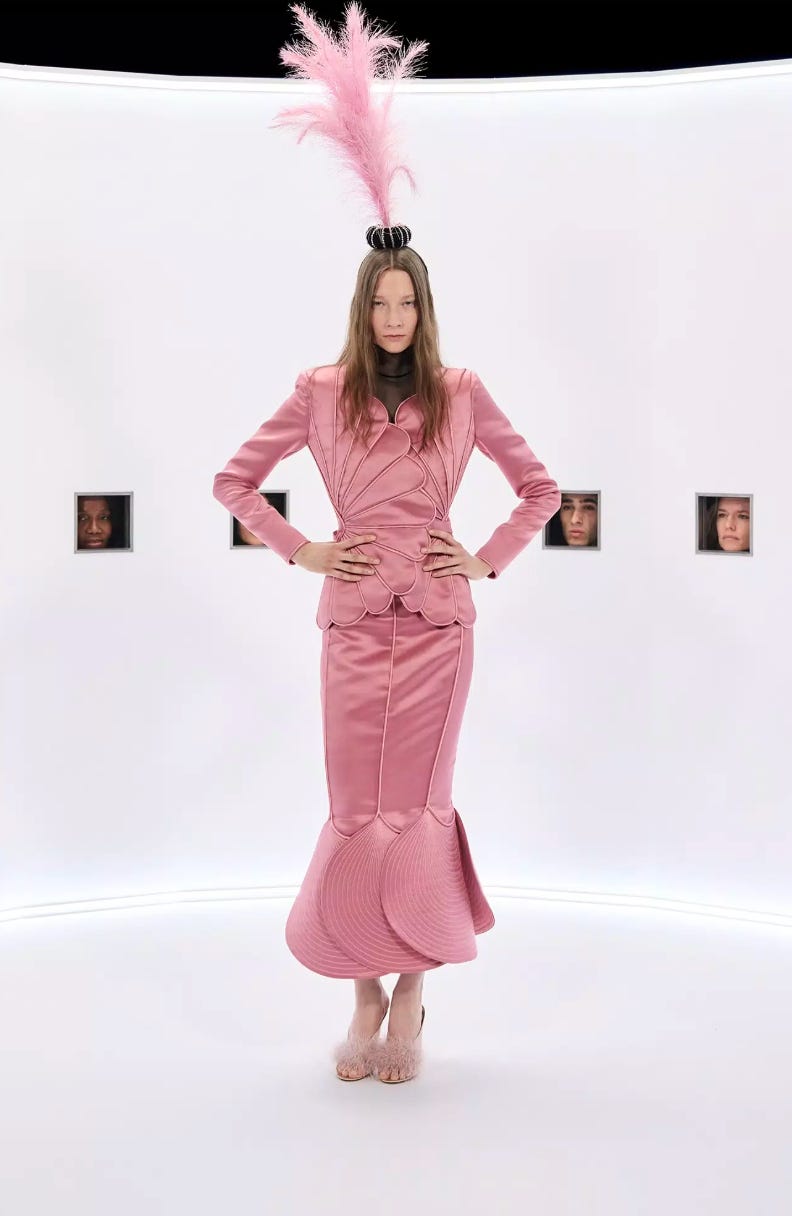
As Michele’s show notes suggest, this was a space where “the image doesn’t overwhelm the spectator — it educates him.” It teaches you to focus the gaze, pause, and take it in.
In an industry - and a world - increasingly designed for instant consumption, the insistence on slowness feels almost radical.
Opening with the house code
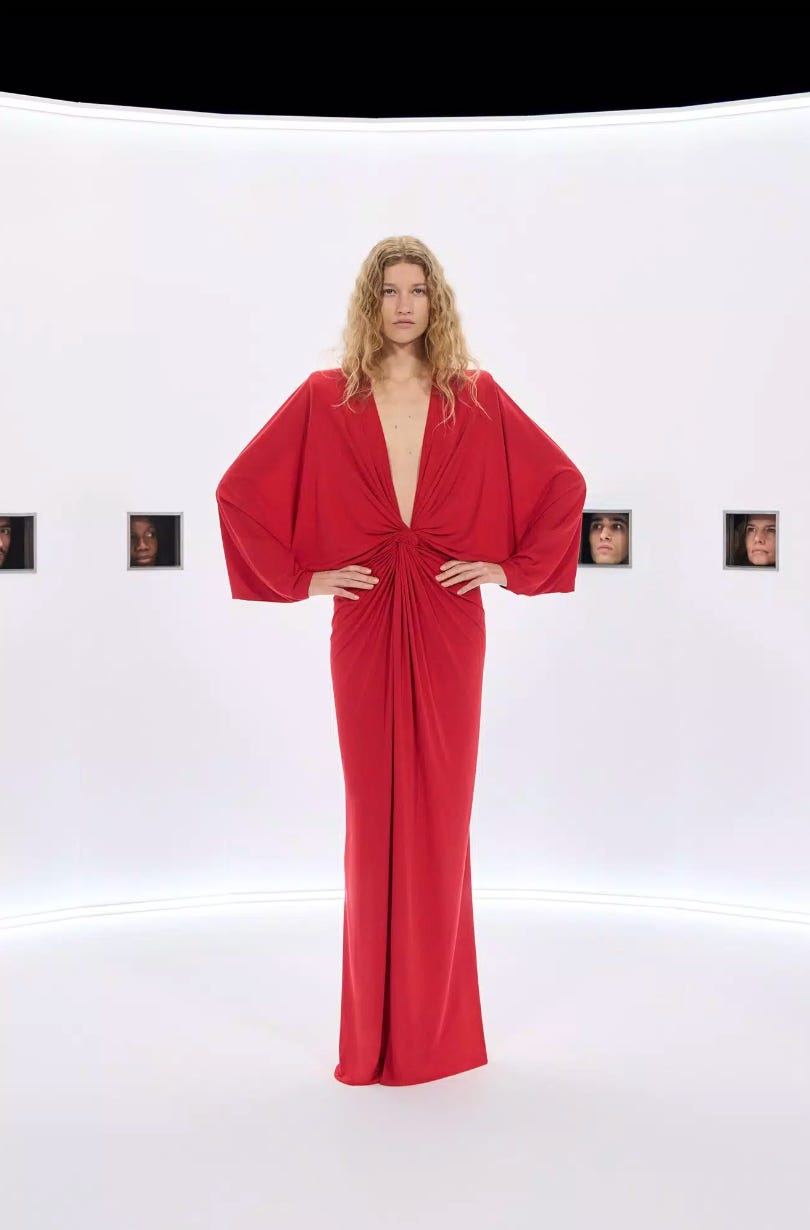
The collection began with a drop-waisted gown in Valentino red — perhaps a homage, and the only obvious one.
From there, the collection moved fluidly across decades. Showgirl feathers appeared early, nodding to classic stage and screen glamour, while Elizabethan-style collars returned as sculptural neckpieces, pulling the focus upward and turning each look into something closer to a portrait. These were garments designed less for movement than for being held in place and carefully observed.


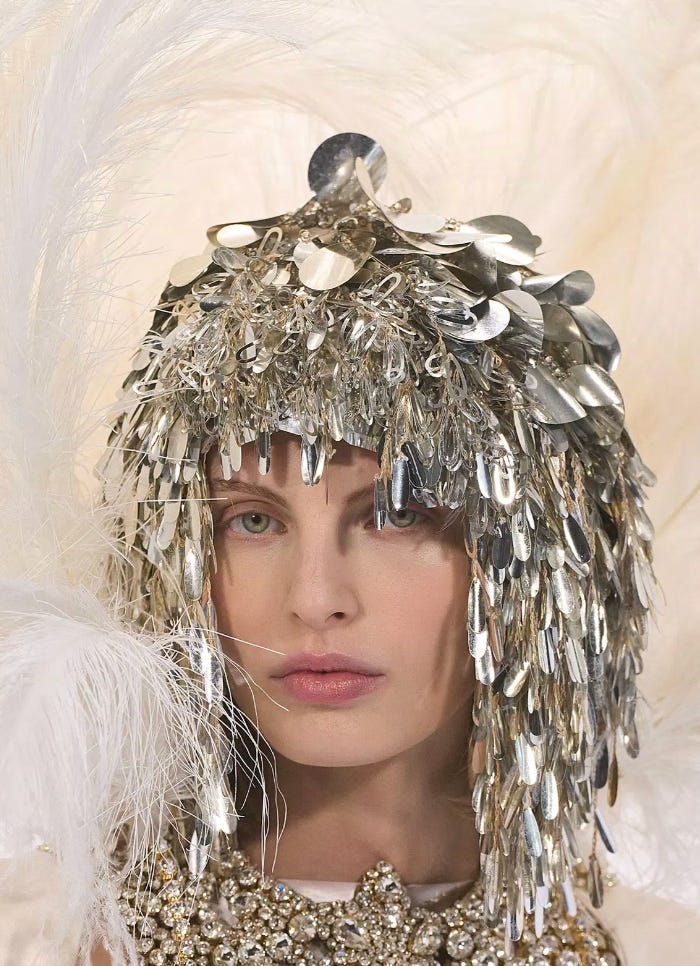
Throughout the collection, headpieces, neckpieces, jewelry, and gloves carried as much narrative weight as the gowns themselves. Accessories didn’t decorate the looks — they completed them. Couture here was cumulative, built from the aggregation of details rather than a single dominant gesture.
Erté, Art Deco, and the pleasure of excess


Michele has spoken about drawing heavily from the work of Erté, the Art Deco illustrator and designer whose elongated figures, graphic opulence, and theatrical glamour defined early 20th-century visual culture. That influence was unmistakable.
Michele didn’t pin the collection to a single era. Instead, he let references overlap — the ’30s next to the ’80s, couture history mixed with costume — all while staying true to the house codes, in a very Alessandro Michele way.
Couture as costume, costume as art
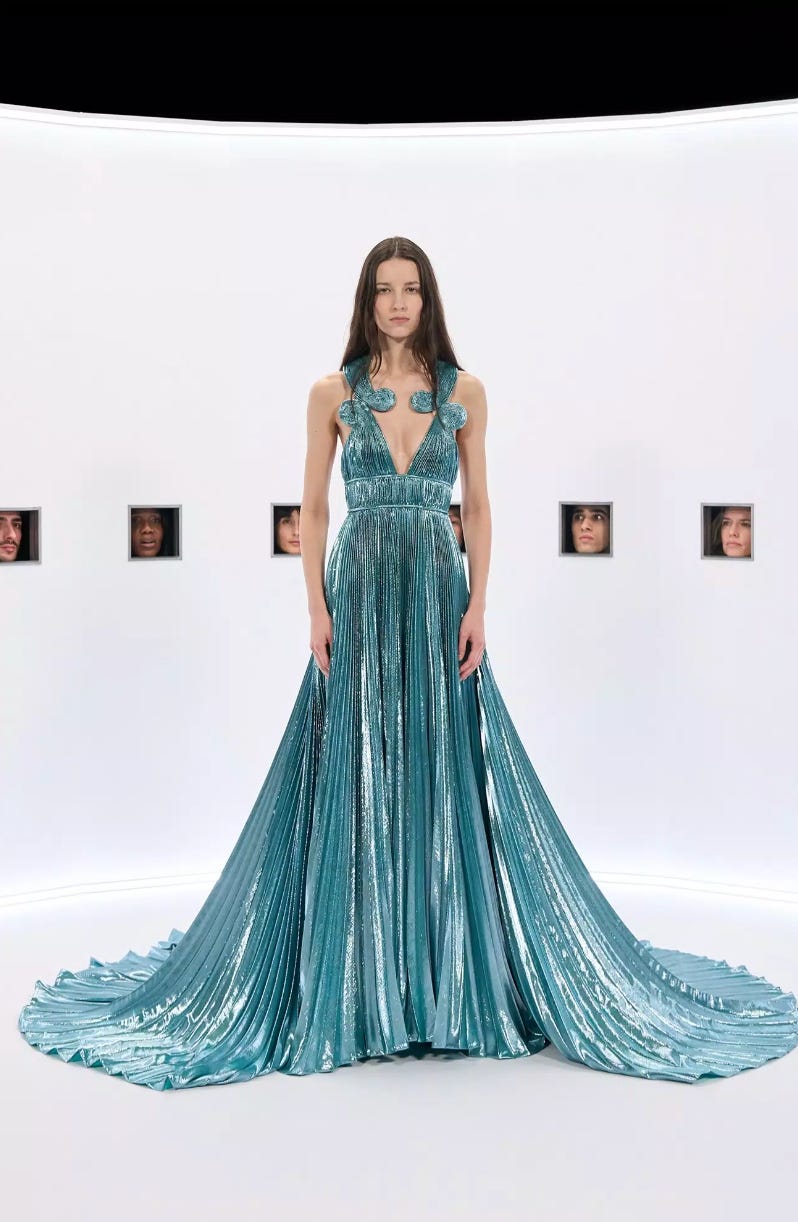
I can’t help playing a quiet betting game while looking at this collection — who might end up wearing what on the Met steps. Especially this year, with the theme Costume Art, exploring fashion’s relationship to fine art and the dressed body. Several looks here feel almost destined for that moment: sculptural necklines, operatic headpieces, gowns that read as complete visual compositions.
This one, in particular, is giving me Margot Robbie. Do you see it?
On legacy, restraint, and what remains
In a deeply personal letter, Michele spoke of legacy not as something to be preserved intact, but as something that endures only when we resist the urge to rush in and replace what’s been lost. To accept absence, he suggests, is to allow a house to keep moving without erasing its past.
The show didn’t ask for applause. It asked for stillness — and earned a standing ovation all the same. In that pause, it became clear how much meaning is lost when fashion is rushed, and how much returns when we slow down.